
The program utilizes the Circle of Security® Parenting™ curriculum, an evidence-based model that teaches parents how to protect and nurture their children while also fostering their independence. Moms delve into the concept of letting the baby leave the circle of security to explore a safe environment, then being there to welcome the child back for nurturing and care. “It’s a really beautiful approach to the idea of attachment,” Turman said, “and our moms love the concept and are doing great work reflecting on how they can provide that security for their child.”
 The weekly Circle of Security classes have proven to be invaluable in providing solid fundamental skills while encouraging awareness and reflection of parent-child attachment. As the program grew, the team identified an additional need for a more focused class on infant development.
Now, moms also attend a weekly Milestone Moments class that teaches the social, emotional, cognitive and motor domains of infant and toddler development. “Most parents – and this is a fairly universal experience – don’t have a lot of realistic expectations about their infants and toddlers,” Turman said. “The milestones class helps parents understand typical infant development and outlines what should be happening and when. If there are any concerns, the curriculum also teaches parents how to talk to providers and advocate for their child.”
The final component of the program is weekly Play and Learn classes, made possible by thoughtful collaboration between the Department of Corrections staff and the IU team. When the program started, the team was not allowed to keep any children’s materials in the space permanently due to facility regulations. Using justification from the parenting model and citing experts in early childhood development, the IU team made a case for allowing a permanent play area filled with developmentally appropriate toys and activities.
“Kudos to the Department of Corrections,” Turman said. “This was all new to them, and they were really willing to work with us. Now we have this great space, an environment completely built and designed for maternal-child interaction.”
The Play and Learn classes give moms the opportunity to engage with their children in a safe, supportive space while receiving coaching and feedback. “The moms get to come in and just play with their babies,” Turman said. “Our team is there to watch and observe, to facilitate, to praise. And what we find is really cool is the moms observe and practice what they learn. It’s purely fun – they get rewarded and praised and start to understand their role as a mom and as a parent and the value they bring to their child.”
Results from the Promises of Parenting program have been encouraging. Participants consistently score higher on a standardized test of parental confidence after completing the program, along with reporting increased understanding of baby’s communication, increased understanding of themselves and decreased stress levels in parenting.
“In their qualitative assessments, moms report that they’re really getting a sense of their babies, they understand their baby more,” Turman said. “They know what it means when a baby cries. They understand that they have to give their baby some space to explore.”
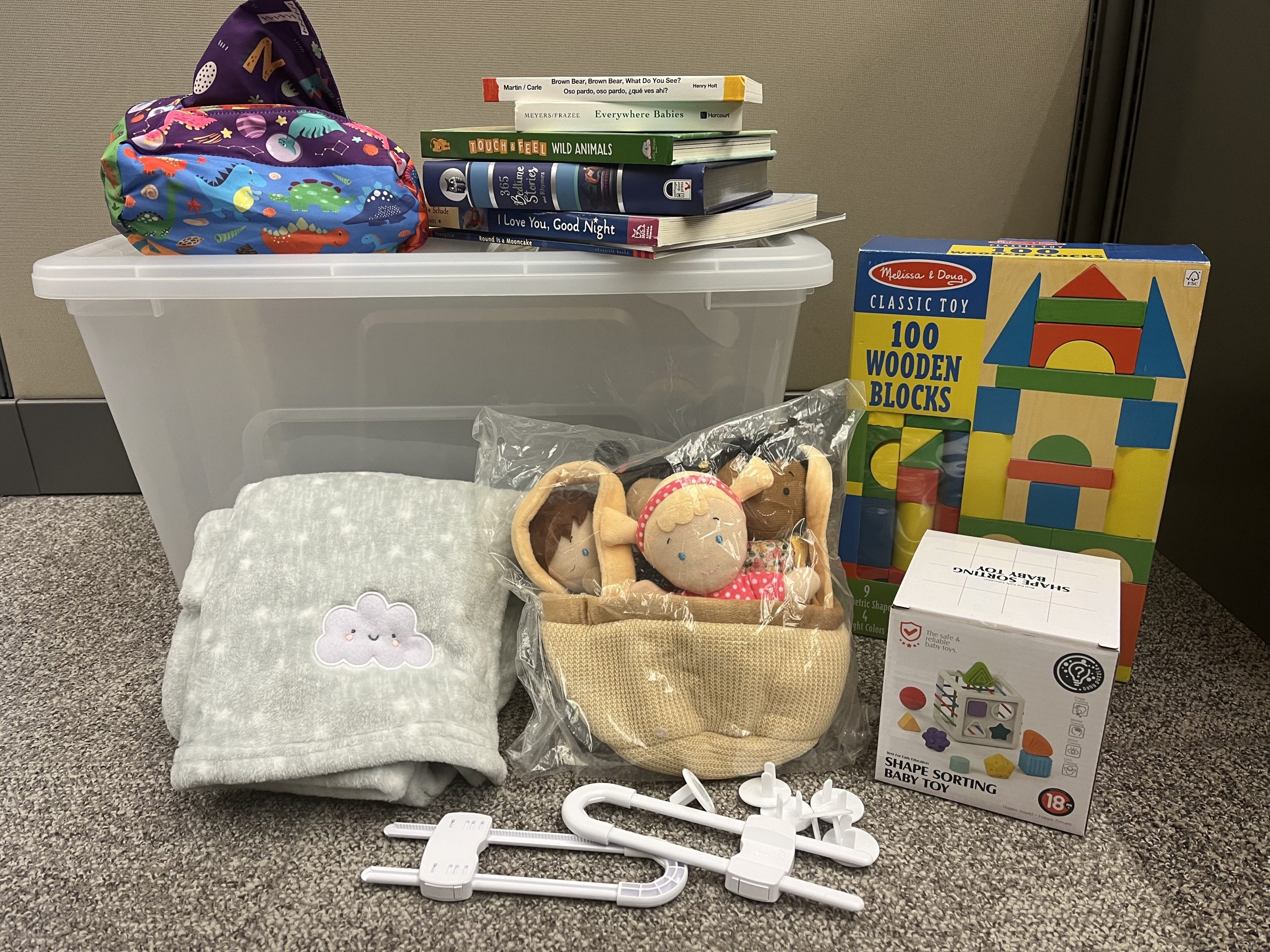
In an enhancement to the program, made possible by Early Years Initiative, moms receive a tub filled with parenting books, essential supplies and developmentally appropriate toys when they join the program, along with another large box of materials when they are released to go home.
“Our moms love, love, love it – they get this huge tub of fun stuff,” Turman laughed. “And it’s theirs to keep in their room when they’re here, and to take home when they go. This piece is so important – if we aren’t helping them replicate what they’ve learned in their home environment, then we haven’t set them up for success when they leave.”
Moms in the program draw strength from each other, building a sense of community and finding commonality in life experiences. “There’s never any judgement or pressure to share more than a mom is comfortable with in our classes,” Turman said. “But it’s been nice to see the moms get some insight into each other and end up feeling less alone in their experiences.”
In a unique addition to the program, a cohort of supportive ‘coaches’ has formed with support of the Department of Corrections. This group of women offers encouragement and helps care for children while the moms attend educational classes or counseling sessions in another area of the facility. “This was completely unexpected and bravo to the Department of Corrections for adding this,” Turman said. “The coaches ask if they can attend the classes too and we’ve had to say, ‘Well no, the program is just for the moms – but you can listen in and learn.’ It’s a whole other set of women who want to learn these skills and it’s been really, really cool to see.”
Turman emphasizes that although the moms in the program are living in a unique situation with unique challenges, their love for their children is universal. “On our maternal attachment inventory, they score very high before we even start the program,” he said. “These moms are very attached to their babies. They love their babies. They want to be good moms. Just because their life circumstances led them to where they are today doesn’t change any of that. On the contrary, they really want the help and guidance and mentorship and to know ‘how do I best raise this baby?’ And isn’t that really all we can ask of any parent?”
No comment yet, add your voice below!