
“The brain develops more rapidly in the first 1,000 days after birth than at any other time, as neural pathways are formed and reinforced through children’s experiences,” said Brett Enneking, PsyD, HSPP, assistant professor of Clinical Pediatrics for IU School of Medicine.
A new program—Resilient Classroom—created at Early Learning Indiana uses the HOPE (Healthy Outcomes from Positive Experiences) framework to counteract adverse childhood experiences (ACEs) and help strengthen positive experiences in young children’s lives.
“Positive childhood experiences, like knowing one adult cares deeply for you; having opportunities for community connectedness; learning social and emotional competencies; and having safe, stable and equitable environments, are associated with flourishing and improved mental and physical health in adulthood,” said Enneking. “These experiences are critical in supporting children to have positive outcomes even when adverse childhood experiences are present.”
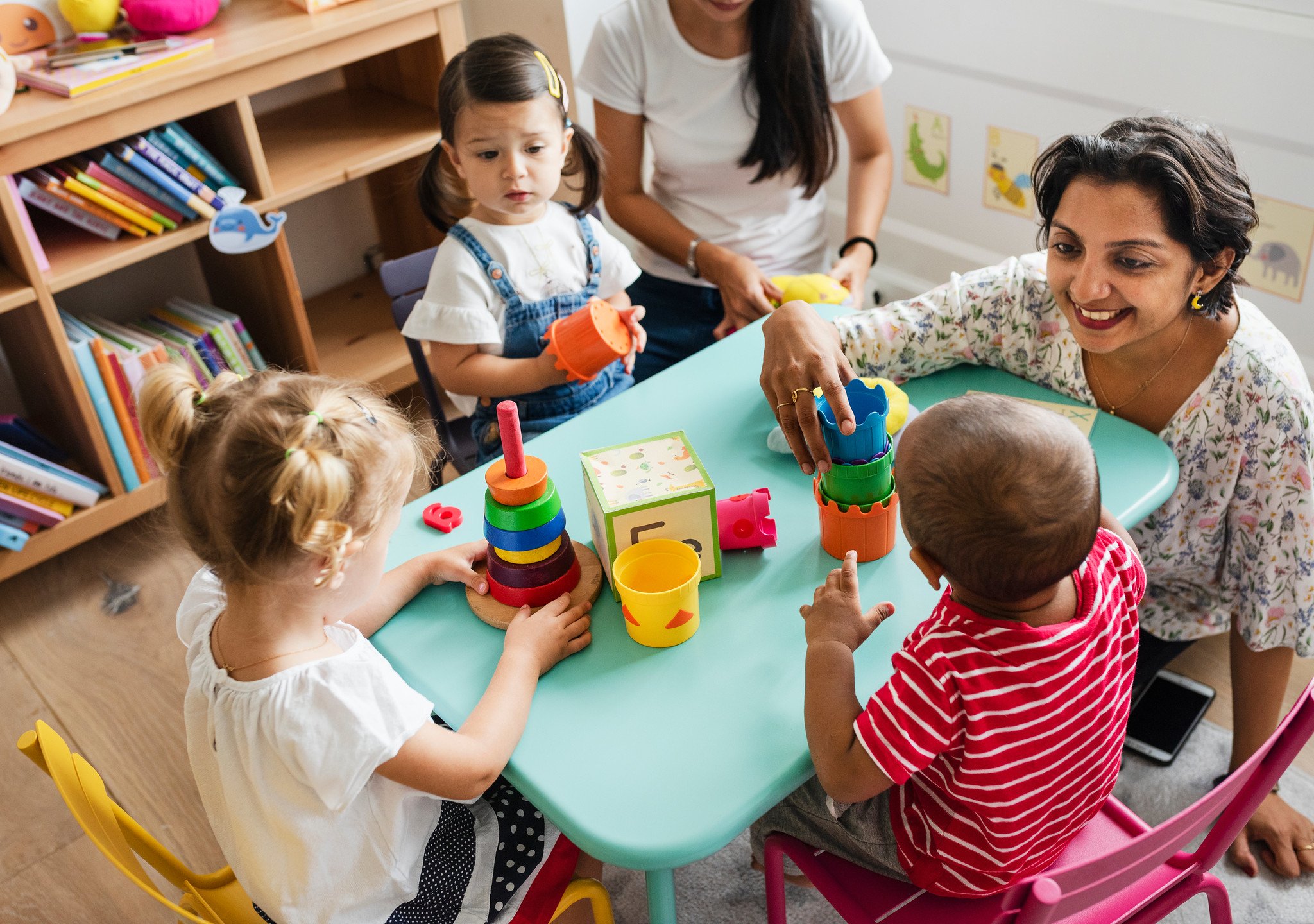
And while one might think a program like this aims to teach new curriculum for children, Resilient Classroom actually helps classroom teachers better understand how children’s brains develop and learn how they can respond differently to children.
“Not only is it crucial that we give young children grace as they are learning to navigate a complex world, but also focusing on adult resilience and regulation can make the difference in behavior support in the classroom,” Livy Zienty, social emotional learning coordinator for ELI, said. “Educators walk away with practical ideas they can use right away in their classrooms to help navigate the many emotions and behaviors present in all early childhood environments.”
Stephenie Johnson, director and teacher at St. Anthony de Padua Preschool in South Bend, enrolled herself and her assistant teacher in the program.
“Before she started the training, my assistant teacher struggled with big feelings from our children. She felt like she couldn’t meet them where they were and help them through it,” Johnson said. “Now, she’s calmer, she talks to them, encourages them and lifts them up.”
Johnson and her assistant teacher were among 229 across the state who completed the Resilient Classroom program made possible by an Indiana University Health Community Invest Fund Grant.
In addition to training teachers, Early Learning Indiana collaborated with IU Health to evaluate the social and emotional health of more than 780 infants and toddlers using the Devereux Early Childhood Assessment (DECA), both before and after their teachers participated in the program.
“It was really cool to see the impact the program had on many of our children,” said Johnson. “In quite a few, we saw a big difference, which was really interesting considering it’s not curriculum for the classroom, it’s more of training for teachers.”
Across the board, the data indicated a statistically significant improvement in student initiative, relationship-building, self-control, and overall protective factors. These findings suggest that the curriculum may positively impact factors associated with child flourishing.
“My biggest takeaway from the program was to take a breath first. Don’t react, respond,” said Johnson. “We are these children’s safe spaces. If we aren’t acting safe, they won’t feel safe.”
Learn more about the program here.
No comment yet, add your voice below!